
Finding Arlington County Residents
Arlington County does city and county work through the same local government, so there is no separate city clerk or municipal court to search. Start with the fact you know. An address belongs first in Arlington Property Search and AC Maps. A name that appears in a deed, probate matter, or court docket needs a second record that agrees on locality, date, legal description, or relationship. A current owner is not automatically a current occupant, and an old directory entry is a dated historical clue rather than a present-day answer.
The strongest Arlington residents directory trail is a chain of small confirmations. Keep the parcel’s RPC, the legal description, map book and page, and the spelling used in each record. Those details survive better than an address when a unit number changes, a property is held by a trust, or a historical volume uses an earlier street name. The County’s public information describes people connected to a record, not a complete list of every household member.
- Search the address in Arlington Property Search and record the situs address, owner, mailing address, RPC, and legal description.
- Open AC Maps to compare the parcel with street, ZIP, precinct, and civic-association layers.
- Use the recorded owner or deed identifier in the Circuit Court land-record index, then match the legal description before accepting a transfer.
- For a named person, compare any public court or probate lead with the correct clerk file and its access rules.
- For a past household, consult the Charlie Clark Center for Local History’s directory, census, newspaper, and map collections.
Arlington Records Offices for Residents
Four Arlington County offices form the practical core of a residents directory search. Real Estate Assessments ties parcels to tax-roll ownership. The Circuit Court keeps recorded land documents and probate files. The elections office administers voter material under Title 24.2, while the Charlie Clark Center preserves the local sources that are most useful once a search moves into earlier decades. Each office answers a narrower question than the word “resident” suggests.
Use the office that holds the original record when a detail matters. Assessment staff can address a parcel-card error, and the Circuit Court divisions handle their own land, civil, criminal, and probate files. The County’s local-history center is the right route for old telephone, real-estate, and county directories. Street-by-street parcel work belongs in the Arlington Street Directory, where the address chain is handled in depth.
Circuit Court Land Records
1425 N Courthouse Rd., Suite 6200
Arlington, VA 22201
703-228-4369
Real Estate Assessments
Arlington County Government Center
Arlington, VA
703-228-3920
Voter Registration and Elections
2100 Clarendon Blvd., Room 320
Arlington, VA
703-228-3456
Arlington Parcel Records First
Arlington Property Search is the first official stop for an address. Its results can show an RPC or parcel identifier, situs address, recorded owner, legal description, mailing address, class, zoning, map book and page, assessment history, sales, permits, and stormwater information. The County says its data is updated nightly, but document-processing delays can still leave a gap between a recorded change and what appears on the card. Treat the record as an assessment and parcel source, not a household roster.
The key distinction is situs versus mailing address. Situs identifies the physical parcel. Mailing address is where the tax office sends correspondence for the owner. An owner may be a company, trust, or person who receives mail elsewhere. The legal description and RPC are the more durable bridge to a deed, a permit file, or a historic map.
The Arlington Property Search landing screen shows the public entry point for this Arlington residents directory source.
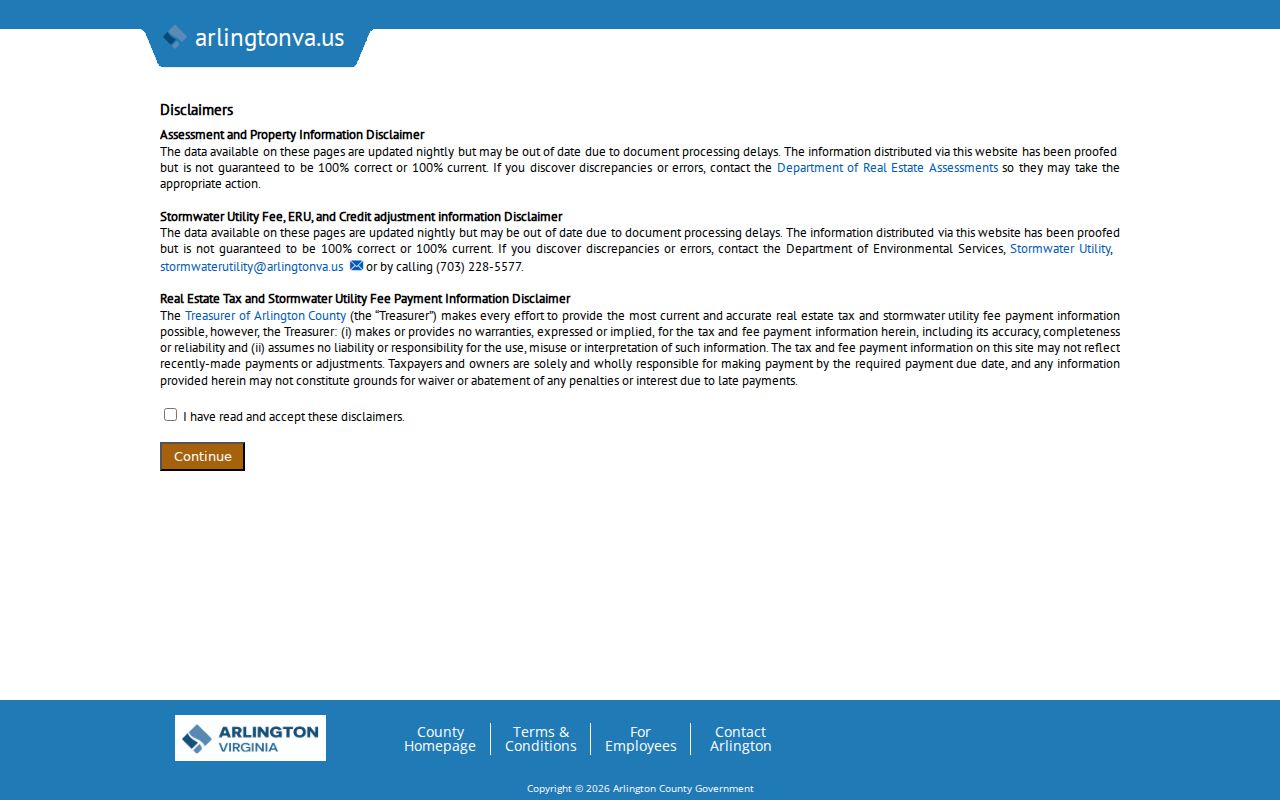
Use the address result to capture the parcel keys before following a person or property through another record system.
- Parcel or RPC
- The County’s identifier for a real-property record, used to keep one assessment record distinct from another.
- Situs address
- The physical address attached to the parcel for assessment and map purposes.
- Legal description
- The lot, subdivision, unit, or other title description used to match recorded instruments.
- Index
- A finding tool that points to a record. It is not always the record image itself.
Note: A property result can identify a recorded owner and tax mailing contact, but it does not establish every person who lives there.
Arlington Voter Access Has Limits
Virginia’s Citizen Portal is built for a voter checking that voter’s own registration. It asks for first and last name, full date of birth, the last four digits of a Social Security number, locality, and a certification step. It can return registration status, polling place, districts, absentee status, and voting history for that individual. It is not a public name-and-address directory, and a nonmatch belongs with Arlington’s general registrar rather than a guess about the person’s residence.
Virginia law separately controls public voter lists. The statutory list can contain a name, address, year of birth, gender, and districts, while protected addresses and more sensitive fields are excluded. Complete VERIS records are not open through VFOIA. Address-confidentiality participants and eligible protected voters can appear with a post-office box rather than a residence address, so a missing home address is not evidence that a person is absent from Arlington.
The Virginia Citizen Portal image shows the individual registration-status route used for Arlington County.
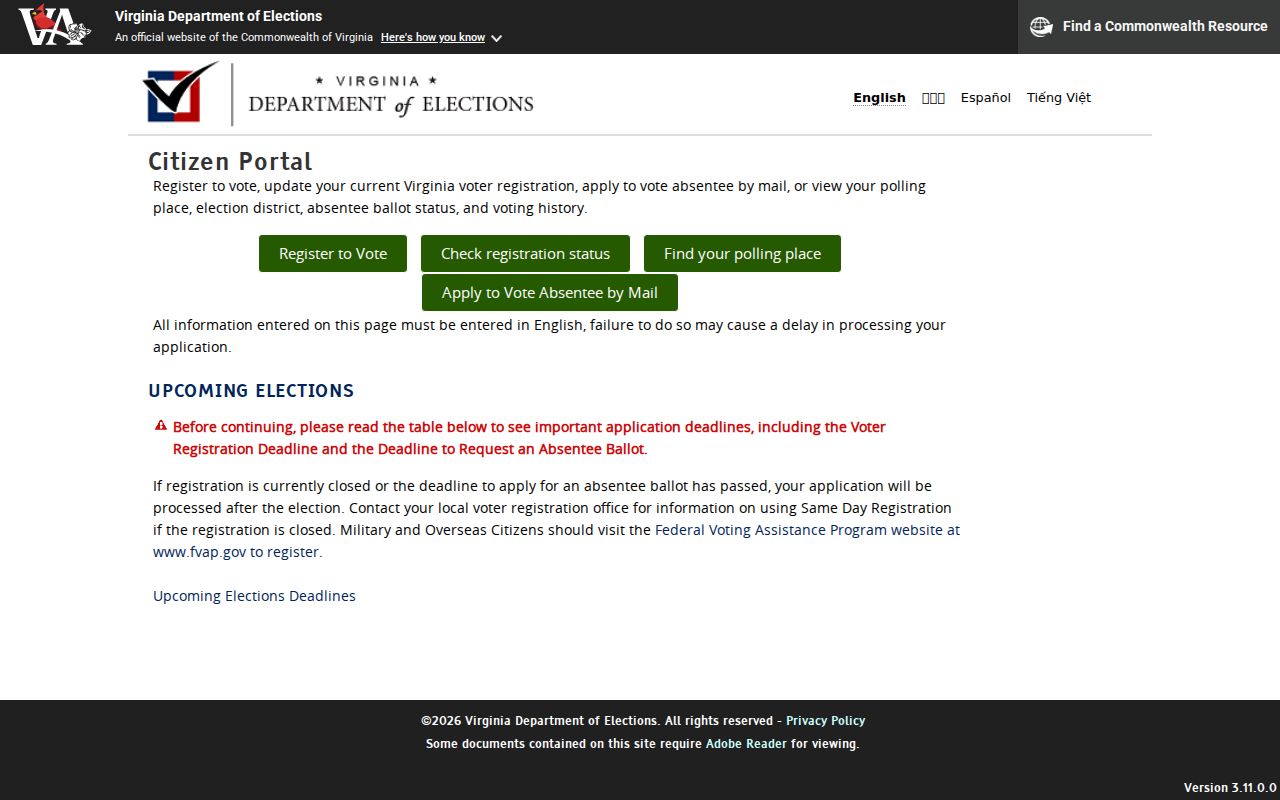
The required identity fields explain why the portal is a personal verification tool rather than a public residents list.
Current Arlington Resident Directories
No single current Arlington County roll names every resident. A parcel card identifies a recorded owner and mailing address. A deed index identifies parties to a recorded transaction. Court and probate records identify people connected to a case or estate. County community listings identify organizations and public contacts, not their memberships. Match the source to the question, then preserve the date and limitation that came with it.
| Arlington source | Person connection | Keeper | Access route |
|---|---|---|---|
| Property card | Recorded owner, tax mailing address, situs parcel | Real Estate Assessments | Public web result and department correction contact |
| Recorded land index | Grantors, grantees, and other document parties | Circuit Court Land Records | Registered index, kiosk, limited mail copies |
| Statutory voter material | Controlled registration-list fields | Registrar and Department of Elections | Title 24.2 inspection and request rules |
| Probate file | Decedent, fiduciary, heirs or legatees in filed material | Circuit Court Probate | STARR, kiosk, counter, or appointment |
| Community listings | Organization and public contact information | County community programs | County directory and civic-association map |
A current residents directory question should never turn a record connection into a claim about an entire household. Tax rolls, voter material, and court records each cover a different population and are updated under different rules. The comparison is what makes a result useful.
| Official record route | Commercial lookup category |
|---|---|
| Identifies the custodian, record date, and access rule for a specific public record. | May combine marketing and public data, which can mix same-name people or retain old addresses. |
| Lets a researcher check the underlying parcel, docket, or document. | Does not replace confirmation with the original County or state record. |
Arlington Deed Records Since 1869
Recorded documents give an Arlington residents directory search a dated property connection. Arlington Official Records Search provides a free index after registration, while document images cost $0.50 per page plus a $2 transaction fee. The County also offers a secure remote subscription at $50 per month or $600 per year. Remote land-record access reaches through 1869, but that does not make every document equally easy to read or prove who occupied the property.
When remote access is not enough, the Circuit Court’s public kiosks are free and available Monday through Friday from 8 a.m. to 4 p.m. Copies cost $0.50 per page. A mail request can cover up to five documents when the searcher already knows the book and page, with the requested materials, a self-addressed stamped envelope, and payment. Land Records staff can provide general guidance but do not conduct research.
The Circuit Court Land Records page shows the Arlington access channels for the registered index, kiosk, and remote records.
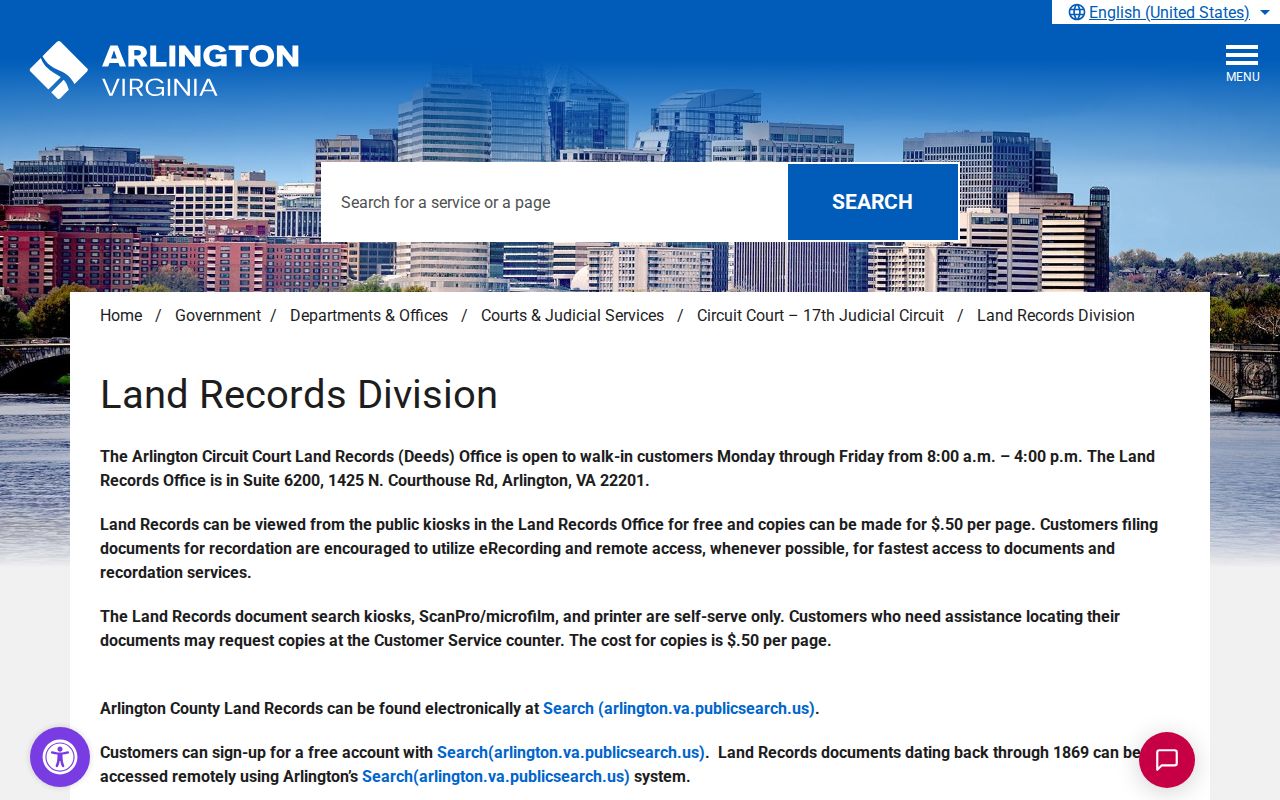
A document party and a parcel match make a strong land-record connection, but an owner’s name alone is not proof of present occupancy.
Note: Record the grantor, grantee, document date, legal description, and book or document identifier before moving to another link in the chain.
Arlington Court and Probate Leads
Virginia OCIS and General District Court search tools can supply a name variant, court, case number, hearing date, charge or code section, and other entered case-detail fields. They are informational systems, not the official court record. Arlington Circuit Court files, land records, and probate systems are separate from the state court search, and Virginia does not offer one statewide search covering every Circuit Court case.
Probate can be especially useful for estate and heir research. Arlington’s probate material is computerized from 1997 forward, with images after 2000; its 1800 through 1996 indexes are available at the public kiosk. A will, appointment, or later deed can connect a decedent, fiduciary, legal description, and estate transfer. The connection still needs careful reading because a fiduciary’s address is not necessarily an heir’s current residence.
Juvenile, domestic-relations, sealed, expunged, adoption, and other confidential material may be unavailable. Virginia’s sealing legislation effective July 1, 2026 requires a no-record response for unauthorized requesters in covered situations. Use an available clerk file to verify only the procedural fact that the record actually establishes.
Arlington Vital and Family Records
Virginia Department of Health is the statewide keeper for birth, death, marriage, and divorce certificates. Birth data becomes public 100 years after the event. Death, marriage, and divorce data open after 25 years. Before those periods, a certified copy requires the right relationship or legal authority and identification. The current fee is $15 per search or certificate, and the state describes online processing in five business days and mail processing in eight days.
Arlington Department of Human Services can issue an Arlington death certificate for a death within the preceding five years, subject to its relationship and identification rules. Older family-history work may shift to Library of Virginia microfilm, which holds surviving birth and death records from 1853 to 1896 and marriage records before 1936. There is also no statewide birth and death registration period between 1896 and June 14, 1912.
The Virginia vital-record application page displays the official online application route and current fee notice.
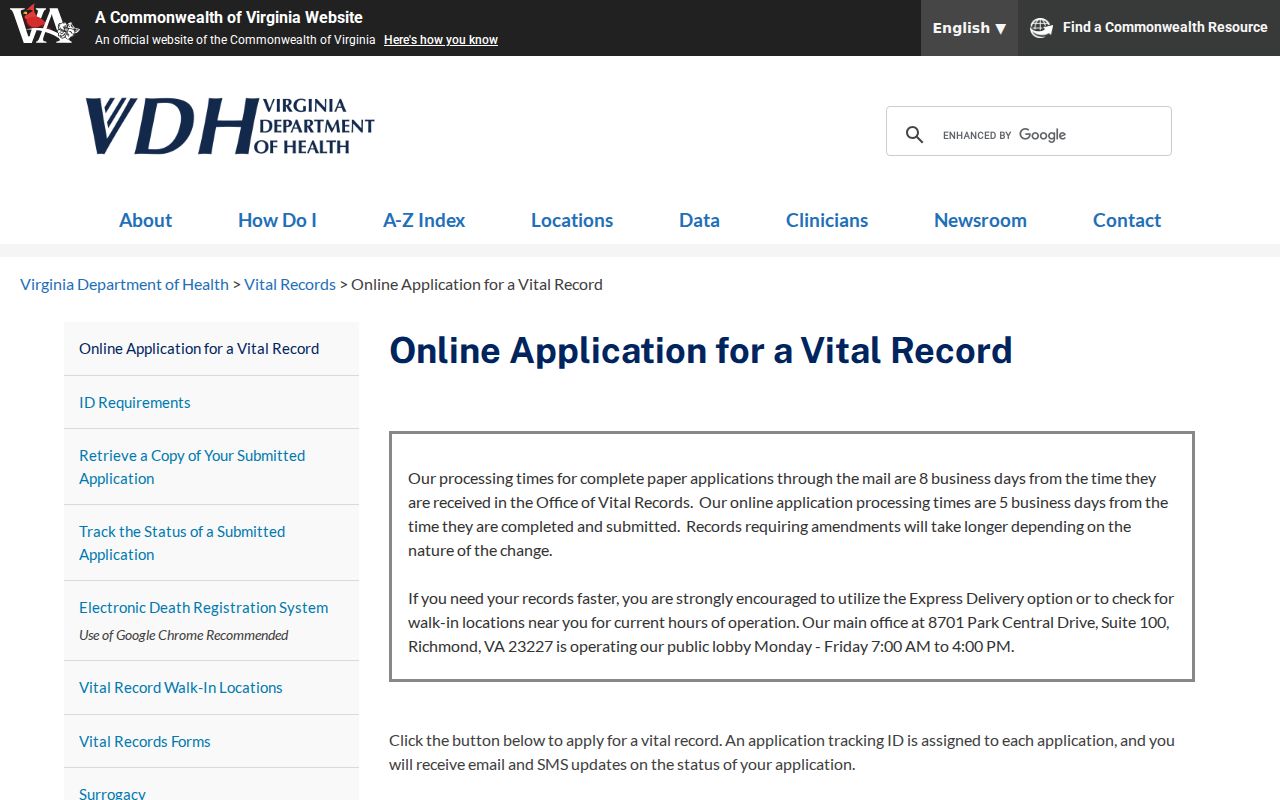
Vital records can confirm an event or relationship when the statutory access period and requester eligibility permit it.
Arlington VFOIA Record Requests
When a needed existing County record is not online, Virginia Freedom of Information Act requests go to the actual custodian with reasonable specificity. Under Va. Code §2.2-3704, the public body has five working days to provide records, cite a lawful withholding, say it has no responsive record or identify the right custodian, or explain why more time is needed. A timely more-time response can add seven work days.
VFOIA does not compel Arlington County to create a residents directory, answer a general research question, or release records closed by voter, vital, court, juvenile, medical, adoption, or other confidentiality laws. Actual access, search, duplication, and supply costs may be charged, and a deposit can be requested if expected charges exceed $200. Ask for a cost estimate when the scope is uncertain.
Arlington’s 1935 Street Bridge
Old Arlington research can disappear under a modern address search because original street names and numbers changed in 1935 after a new system was adopted in 1934. The Community Archives holds the Arlington County Virginia Directory of Street Names from 1935. The County ZIP map also notes that South and West sides of numbered streets use even numbers. Directional prefixes and suffixes matter when an old address is compared with a current parcel.
The more basic naming change is jurisdictional. Records can say Alexandria County, Virginia; Alexandria County, District of Columbia; or Arlington County depending on date. The Library of Virginia identifies the District of Columbia period as 1801 through 1846 and the Arlington County renaming as 1920. Search the historical county name and both address forms before deciding that a person or property is missing.
The County’s local-history collections have a further human-scale bridge: the 1920 project supplements census schedules with death certificates, World War I enlistment forms, and 1910 and 1930 census material when the schedule was illegible or missing.
Historical Arlington Resident Directories
Arlington’s historic directories are spread across several repositories rather than one continuous online run. Nelson’s Directories cover 1912 through 1931 at Washingtoniana. Hill’s Alexandria Directories cover 1938 through 1955 there. The Charlie Clark Center for Local History holds Hill’s and Polk’s runs from 1924 through 1976 and Haines Arlington volumes from 1976 through 1990. Old county, telephone, and real-estate directories add other years and formats.
A directory can connect a person to an address, occupation, spouse, or a street listing when the volume contains one. It cannot settle ownership, full household membership, or a later move by itself. The Charlie Clark Center is at Central Library, and its reference material is used by appointment. The full historical-shelf method appears in the Arlington City Directory.
For off-site Community Archives material, identify the collection, box, series, file number, and title in the finding aid before making a request. The County says retrieval can take one week and patrons are notified within seven business days when material is ready.
Arlington Community History Sources
Property records are only one kind of local evidence. The Charlie Clark Center for Local History holds about 350 Arlington school yearbooks, local census microfilm, newspapers, maps, oral histories, photographs, family histories, and subject files. The Arlington Community Archives also keeps personal papers and organizational records. Those collections can place a former resident in a school, civic group, or dated neighborhood event without claiming a current address.
The Center’s oral-history program began in the 1970s and had 575 catalogued interviews in its published description. Its newspaper material includes digitized Columbia News, Daily Sun, Northern Virginia Sun, and Sun items from 1935 through 1978. These sources are useful for reconnecting with relatives, classmates, or neighborhood history after a parcel or directory provides a date and address.
Note: A newspaper, yearbook, or oral-history mention establishes only what that particular item says, so retain its date and collection citation.
Arlington Custody and License Searches
Some public systems answer a narrower question than residence. The Arlington Sheriff’s Inmate Query accepts name, subject number, booking number, custody status, booking-date range, and facility filters. Its results show a photo, name, and subject number. A custody listing is informational and does not establish guilt, a complete legal status, or a person’s home address. State and federal custody systems use their own separate search rules.
The Arlington Sheriff Inmate Query shows the fields and result-table structure used for that limited record type.
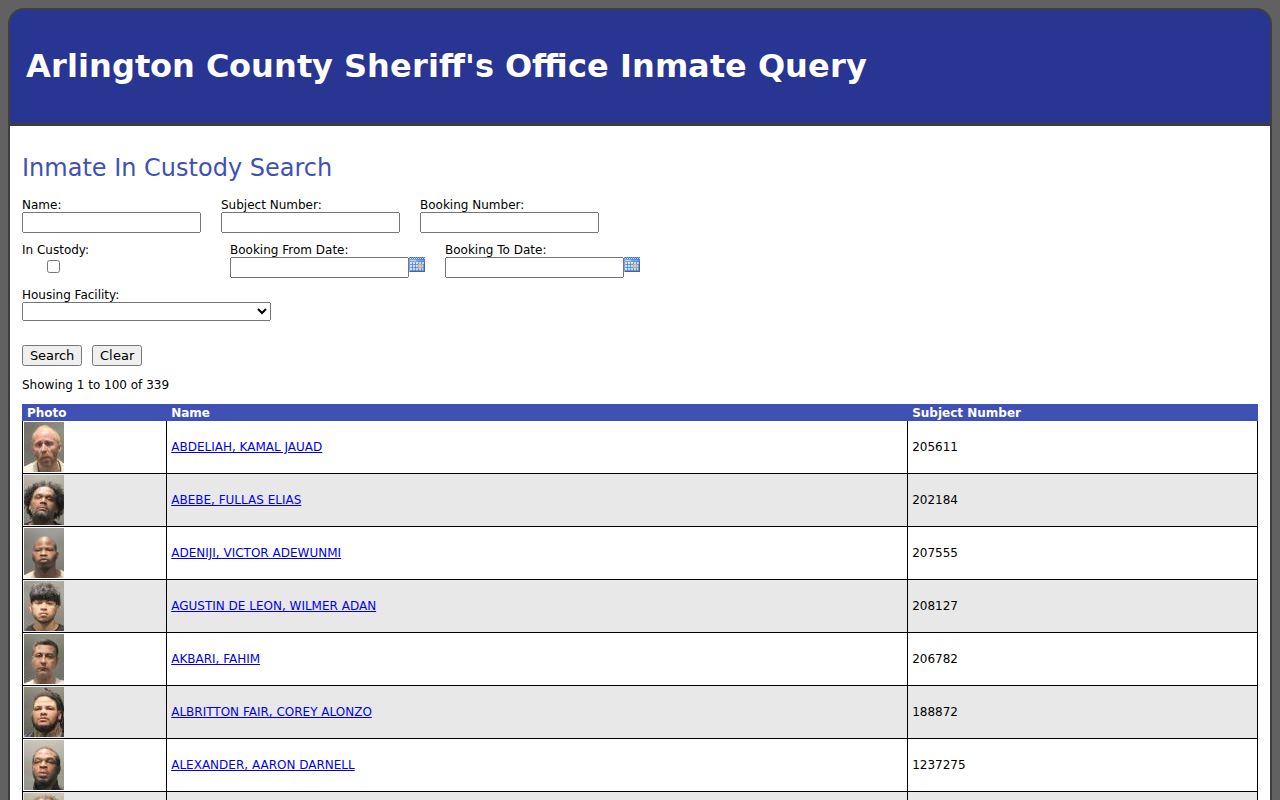
Use a custody result only for the status it reports and verify later court developments with the proper court record.
Virginia DPOR’s license lookup is another separate affiliation source. It offers a search field and advanced search, but the agency says its web data is not its formal public record. A professional or business address is not evidence that a licensee lives at that location.
The Virginia DPOR License Lookup screen illustrates this official convenience-search route.
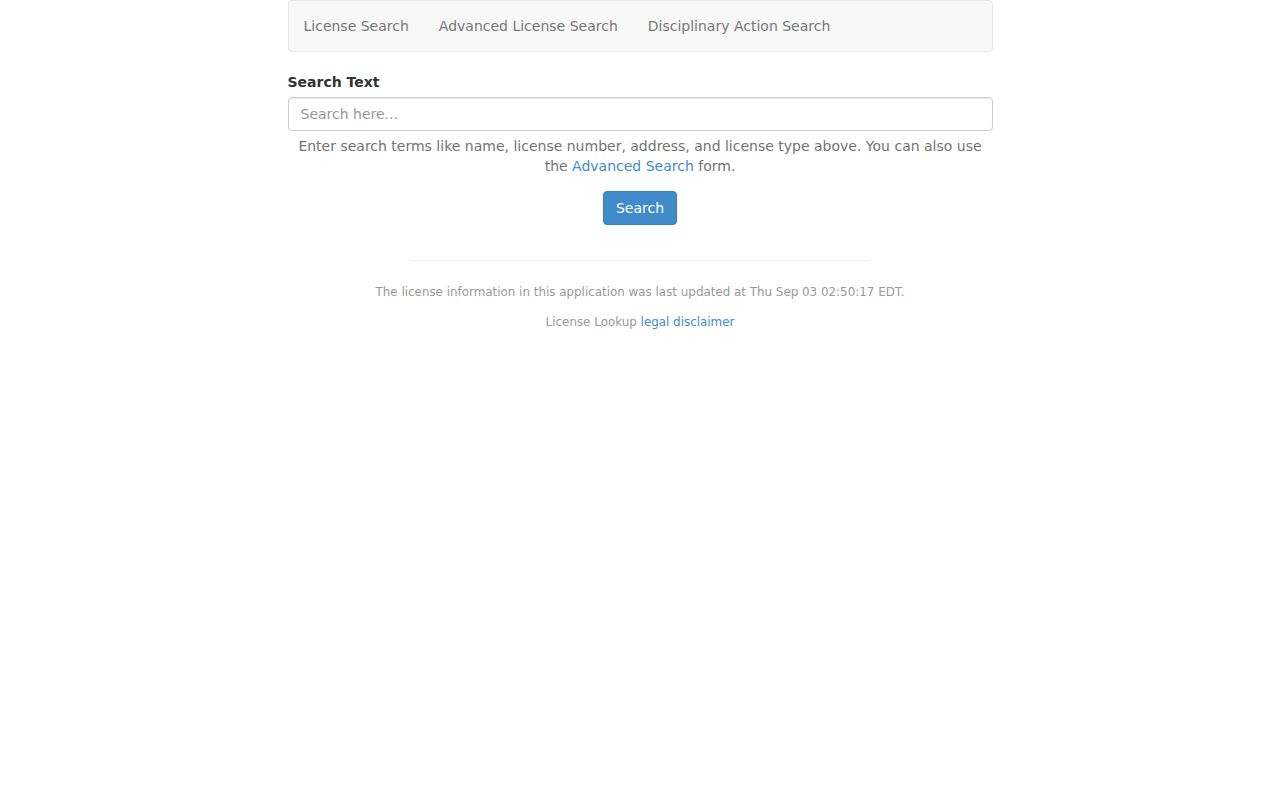
Check a license result with the issuing agency when a current professional status or formal record is needed.
Arlington Scam-Safe Record Checks
Public records can make a scam sound convincing, so verify contact information independently. Arlington Police warned in July 2025 that callers could falsify caller ID and pose as police demanding money. An October 2025 warning covered outstanding-warrant and jury-duty demands, as well as property-improvement scams. The County and Sheriff do not call, text, or email to collect fines.
End an unsolicited call, then use an official number already published by the agency. For a police impersonation concern, Arlington directs people to 703-558-2222. A deed-copy letter should be checked against the Circuit Court’s published fees and telephone number, not against a number printed on the solicitation. A record search is safest when its source, date, and custodian can all be checked.